
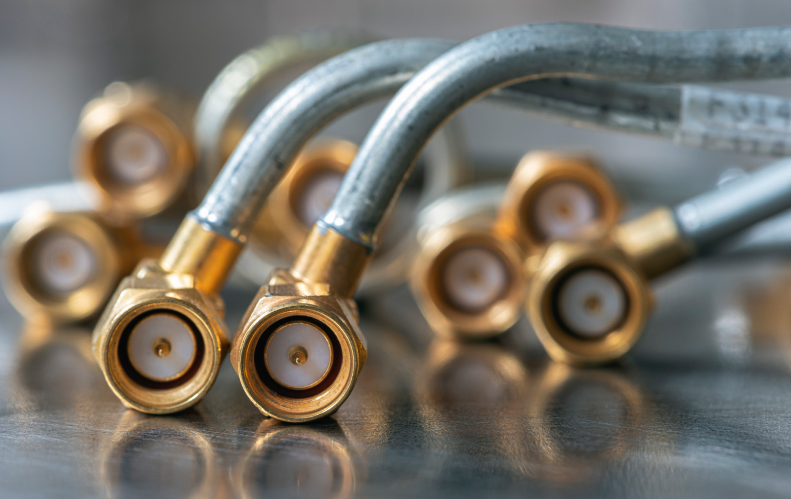
Have you ever had to work on a system where the radio frequencies (RF) are critical? Then you know that on paper, everything works so smoothly. Specs are fine in a datasheet, but in real life? That is where it becomes messy.
And in those environments where you have a lot of heat, vibration, moisture, or electromagnetic noise, your coaxial cable is not a passive component. It is your saving grace. This is where coax becomes interesting and crucial.
Resilience
Whether it’s a signal in a freezing aircraft wing or a cable within a medical imaging system that hums at high frequencies, the environment is critical. And well-designed coaxial cables can take a beating.
When we are talking about aerospace or military implementations, you have to cope with extreme temperature fluctuation, vibration at all times, and limited space. And you want your signal clean and uninterrupted. The margin of error is 0, and dropout is not an option when controlling a drone or synchronizing a navigation system at 30,000 ft.
That is where ruggedized coaxial cables become important. Tougher shielding, low-loss insulators, and military-grade jacketing are not simply marketing terms, but rather, what makes the difference between signal success or utter failure.
Water, dust, and heat resistance
Suppose you are installing RF communications in a dusty oil field or a wet mining tunnel. Humidity and dust are not only irritating, but also killers of signals. Standard coax cable might be great in your laboratory, but the moment you add environmental stress to it, things quickly go out of whack.
This is why industrial coax solutions tend to have such features as:
- A double or triple shielding to prevent EMI penetration
- Outdoor and factory UV- and oil-resistant jackets
- Sealed or armored connectors to exclude moisture and grit.
These cables are more expensive at the time of purchasing, but they will save you a lot of losses when downtime and redesign of the systems occur in the future.
Vibration and movement resistance
Vibration is a silent killer even in so-called more controlled environments, inside a moving vehicle, or when being in proximity to heavy machinery. This may eventually bring about micro-movements within the cable or connectors that reduce the quality of signals.
When you operate RF in situations such as these, mechanical strength and flexibility may be as critical as electrical ratings. Cables must be able to bend, without breaking, and flex, without fatiguing. That is where high-flex coax, strain reliefs, and prudent routing come into play.
It is not a cable but an insurance against interference, failure, and hours chasing ghosts in the system.
Trusted
Coaxial cables become your silent guardian when the RF stakes are high and the environment is unforgiving. The correct cable is not about overengineering but being ready. It is that you can flip the switch, and your signal comes through regardless of what happens to the environment around it.
Summing up
The next time you are planning an RF system in a less-than-ideal environment, don’t only check the specs. Evaluate what the environment will do to your cable and ensure your coax will survive the ordeal.


More Stories
Reconnecting the World: How Online Connectivity is Shaping Our Future
The Web That Weaves Us: How Online Connectivity Shapes Our Modern World
The Future of Internet: Trends Redefining Our Digital World